

If you have ever quietly wondered, "Can I even get pregnant today?", you are far from alone.
Your body is not equally fertile every day, and once you understand the handful of days when pregnancy is truly possible, trying to conceive starts to feel less stressful and a lot more grounded.
Your fertile window, calmly explained
Your fertile window is the short period in your cycle when sperm and egg can realistically meet. Biologically, this window usually spans about six days: the five days before ovulation and the day of ovulation itself.
Sperm can survive for several days in fertile cervical mucus, patiently waiting. The egg, once released, is available for only a brief time, so sperm need to be there in advance or arrive very close to ovulation to create a pregnancy.
Most days of the month, even unprotected sex will not lead to pregnancy because there is simply no egg around to be fertilized. Knowing that pregnancy is only possible in this small window can be surprisingly comforting.
Taking the pressure off timing
Even with good timing, the chance of pregnancy in a single cycle is often around 20–25% for healthy couples. That means it is very normal not to see a positive test after only one or two months of trying—your body may be working exactly as it should.
Almost all natural conceptions happen when intercourse takes place in the fertile window. Within that window, the days just before and including ovulation tend to offer the highest chances.
Rather than feeling pressure every day, you can gently focus on those few key days, knowing that you are working with your body, not against it.
A quiet encouragement: 81% within 6 months
Studies and real-life data show an encouraging pattern: when couples learn to recognise their fertile days and time intercourse accordingly, many of them conceive within a few months. The figure of 81% pregnant within six cycles of well-timed intercourse is not a guarantee, but it is a reminder that chances build over time.
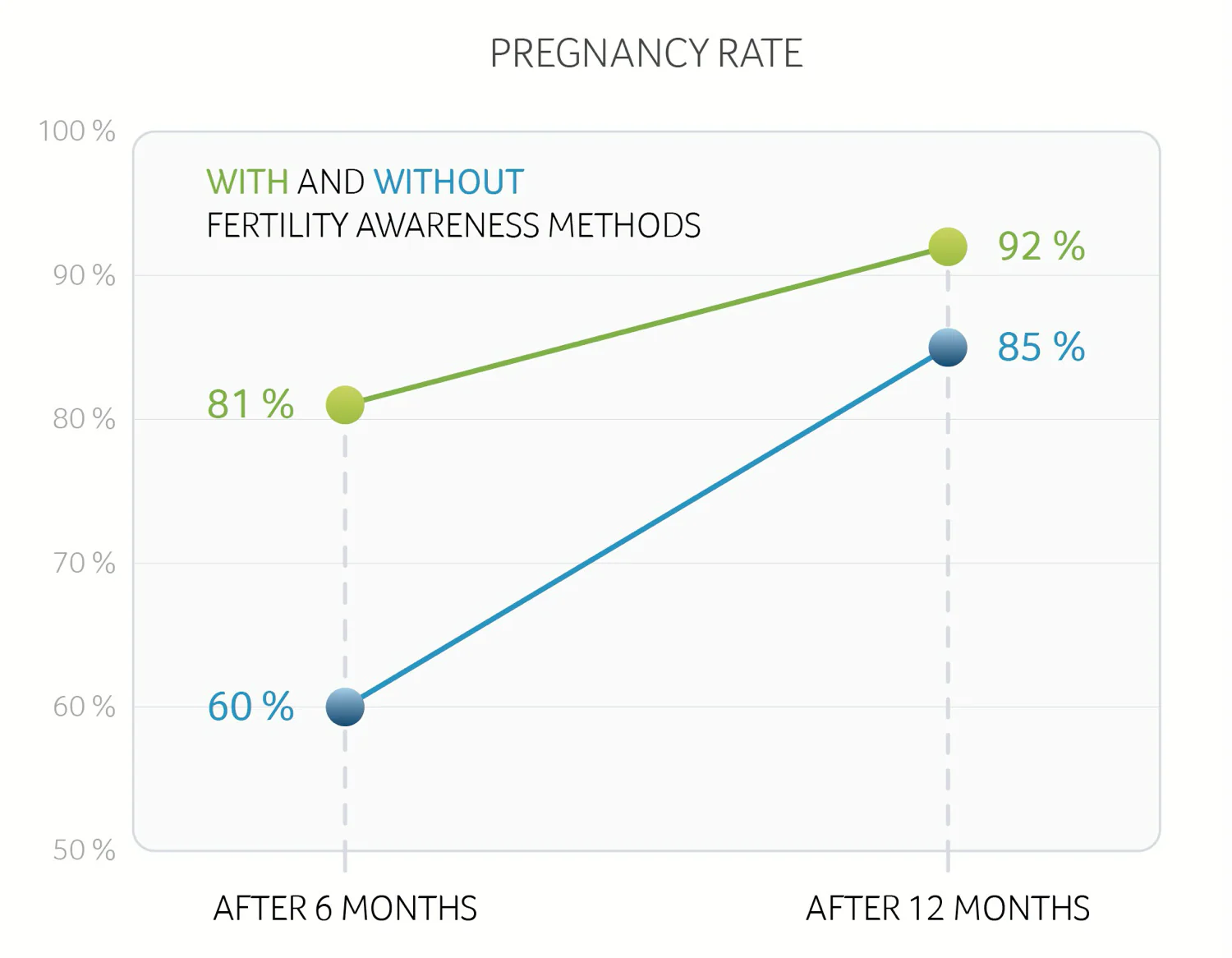
"It can help to think in terms of cumulative chances rather than expecting everything to happen immediately. Each cycle offers another opportunity, and your understanding of your own pattern deepens along the way."
If it takes a little longer than you hoped, that does not mean you are doing anything wrong; often, it simply reflects normal biology.
Listening gently to your body
Your body offers quiet signals that ovulation is on the way, and learning to notice them can feel like building a calmer relationship with your cycle.
Some of the most helpful signs include:
- Changes in cervical mucus, which may become clearer, more slippery and stretchy in the days before ovulation
- The overall rhythm of your cycle length, which gives a rough idea of when ovulation tends to occur
- Subtle temperature shifts after ovulation, which can be tracked over time with a reliable tool
You do not need to master everything at once. Even small steps—like beginning to notice patterns over a few months—can make your fertile window feel less mysterious.
What this means for your journey
When you consistently time intercourse around your fertile window, those modest per-cycle chances add up. Over several cycles, many couples who track and use their fertile days see their likelihood of pregnancy rise steadily.
A short note about Daysy
Daysy is a certified fertility tracker that uses your daily waking temperature and your cycle data to help you identify your fertile and non-fertile days. Instead of trying to interpret every sign on your own, you receive clear, color-coded feedback that supports you in recognising when your fertile window is opening and when ovulation has likely passed.
By combining scientific algorithms with your personal data, Daysy offers a hormone-free way to understand your cycle more deeply. Many users find that this clarity brings a sense of calm and confidence to their trying-to-conceive journey.
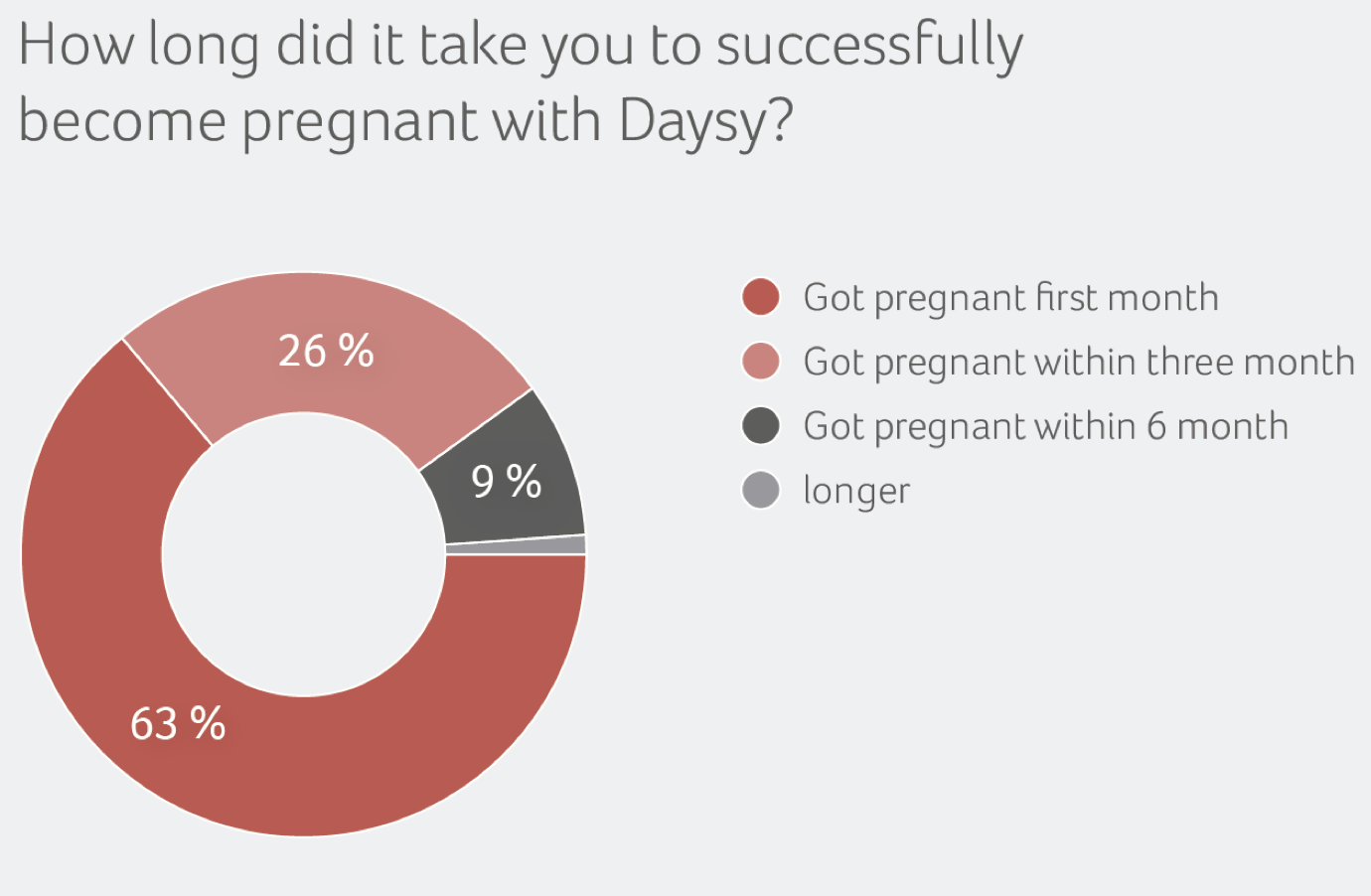
Discover how Daysy can help
More clarity. No guesswork.
If you would like more clarity and skip guesswork in your cycle:
- Discover how Daysy can gently highlight your fertile window
- Use that knowledge to time intercourse to the days when pregnancy is actually possible
- Support your trying-to-conceive journey with a natural, data-based approach
Discover how Daysy can help you understand your fertility more calmly and confidently on the Daysy website.